Epoxy paint is one of the most commonly used coating systems in industrial and commercial flooring. However, choosing without understanding the difference between epoxy paint and epoxy self-leveling systems can lead to negative results in terms of both performance and cost. Therefore, accurately comparing the features of these two systems is very important.
What is Epoxy Paint?
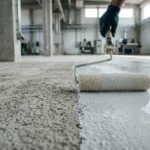
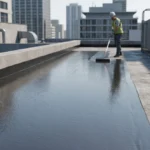
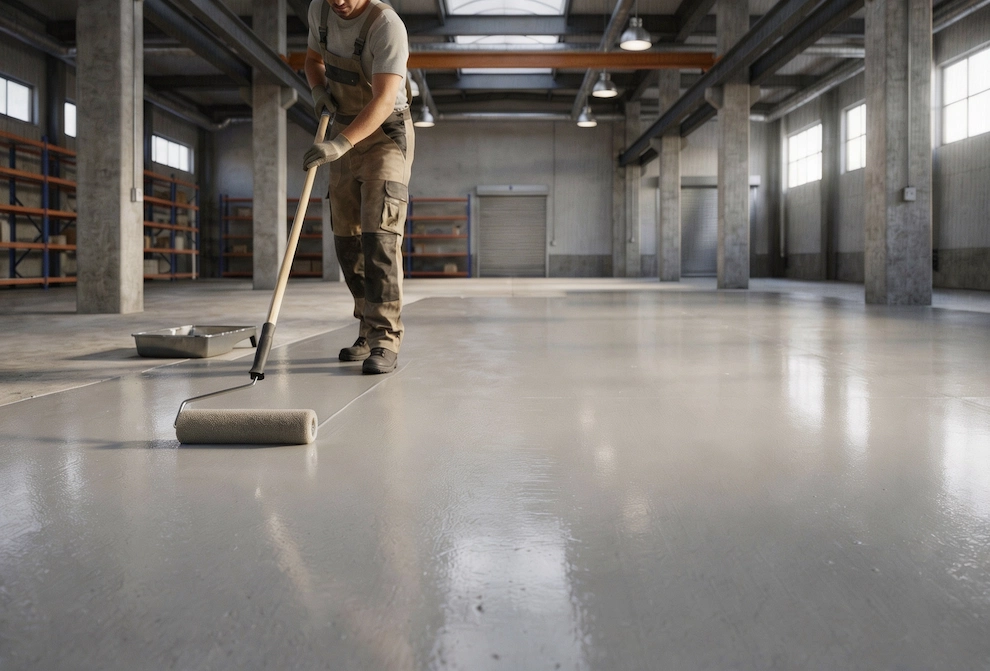
Epoxy paint is a two-component coating system obtained by mixing epoxy resin and a hardener. It can be applied to concrete, cement-based, and metal surfaces. Its main purpose is to protect the floor surface against abrasion, chemical exposure, and moisture penetration.
However, epoxy paint forms a thin film layer. Therefore, it does not completely eliminate surface roughness; it only covers and protects the existing surface. This feature defines its primary areas of use.
Applications of Epoxy Paint
- Durable flooring in warehouses and logistics centers with vehicle traffic
- Creating easy-to-clean surfaces in workshops and production areas
- Protecting concrete in parking lots and garages
- Providing hygienic flooring in food and pharmaceutical facilities
- Anti-corrosion protective coating on metal surfaces
What is Epoxy Self-Leveling?
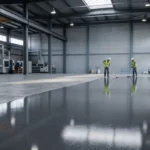
Epoxy self-leveling is a thick-layer flooring system that spreads and levels itself automatically. It is especially preferred in areas where surface smoothness is critical. After application, the system spreads across the surface under the effect of gravity, creating a highly smooth and reflective finish.
In addition, the self-leveling system forms a much thicker layer compared to standard epoxy paint. This allows it to cover minor surface defects and provides higher mechanical strength.
Applications of Epoxy Self-Leveling
- Showrooms and retail spaces requiring an aesthetic appearance
- Clean rooms and precision manufacturing facilities
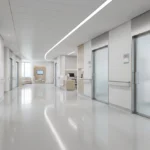
- Hospitals and laboratories requiring high hygiene standards
- Rehabilitation of cracked and uneven concrete surfaces
- Industrial facilities exposed to heavy loads and intensive traffic
Comparison: Epoxy Paint vs Epoxy Self-Leveling
| Feature | Epoxy Paint | Epoxy Self-Leveling |
| Layer Thickness | 0.1 – 0.3 mm | 1.5 – 3 mm and above |
| Surface Roughness | Suitable for rough surfaces | Creates smooth and even surface |
| Appearance | Matte or satin | High gloss |
| Cost | More economical | Higher cost |
| Application Complexity | Medium | High (requires expertise) |
| Mechanical Strength | Good | Very high |
| Ability to Cover Surface Defects | Low | High |
Which System is Suitable for Which Project?
In areas where your budget is limited and the floor surface is generally smooth, epoxy paint provides sufficient protection. On the other hand, if you aim for perfect appearance, high mechanical strength, and long-term use, epoxy self-leveling system is a more correct choice.
For example, in food processing facilities both systems meet hygiene requirements; however, in areas with heavy vehicle traffic, the superior mechanical strength of self-leveling system creates a decisive difference. Similarly, in places such as showrooms where aesthetic importance is high, the reflective appearance provided by self-leveling system becomes a preferred feature.
Polin Kimya Epoxy Flooring Products
Polin Kimya offers a comprehensive product portfolio in both epoxy paint and epoxy self-leveling systems. You can review the following pages to choose the system suitable for your project:
For more technical content and application examples follow Polin Kimya on LinkedIn | YouTube | Instagram
Contact Polin Kimya technical team to determine the correct epoxy system for your project.
Frequently Asked Questions
Is epoxy paint and epoxy self-leveling the same product?
No, these two systems have different formulations and application techniques. Epoxy paint forms a thin film layer while epoxy self-leveling creates a much thicker layer and spreads itself during application to form a smooth surface.
Is surface preparation required for epoxy self-leveling application?
Yes, before epoxy self-leveling application the surface must be cleaned, degreased, and prepared with a suitable primer. If surface preparation is skipped, the coating will not properly adhere and peeling may occur over time.
How often does epoxy paint need to be renewed?
The lifespan of epoxy paint systems depends on traffic density, chemical exposure, and maintenance conditions. Properly applied and regularly maintained epoxy coatings can last approximately 5 to 10 years. This period may be shorter under high traffic conditions.