Bathroom waterproofing is one of the most essential methods for preventing water damage in residential and commercial buildings. Water leakage not only affects the bathroom itself but can also damage lower-floor units and compromise the structural integrity of the building. Therefore, selecting the correct waterproofing material and ensuring professional application in areas such as bathrooms and balconies is of critical importance.
Why Is Waterproofing Necessary in Bathrooms and Balconies?
Bathrooms and balconies are continuously exposed to water. Sources such as showers, bathtubs, toilets, and wet surfaces can lead to leakage over time through floors and wall surfaces. Balconies are additionally exposed to rain and freeze–thaw cycles.
In bathrooms without proper waterproofing, issues such as moisture accumulation beneath tiles, adhesive failure, staining and dampness on lower ceilings, and structural concrete damage may occur. These problems require significantly higher repair time and cost when left untreated.
Waterproofing Materials Used in Bathrooms
Liquid Membrane
Liquid membrane is one of the most commonly used waterproofing solutions in bathrooms. It is applied in liquid form using a brush or roller and forms a continuous, elastic membrane after curing. Its ability to easily adapt to corners, drains, and pipe penetrations makes it highly advantageous.
Cement-Based Waterproofing Materials
Cement-based waterproofing mortars are commonly used on wall and floor applications. They provide excellent adhesion to concrete and plaster surfaces. However, due to their non-flexible nature, they may not be sufficient alone in areas with high crack risk.
Crystalline Waterproofing Systems
Crystalline waterproofing materials penetrate concrete and react with moisture to form crystals that fill capillary pores. This creates an effective barrier against active water pressure. They are especially preferred in basements and water tanks.
How Is Bathroom Waterproofing Applied?
Bathroom waterproofing generally involves the following steps:
- Surface preparation: Floors and walls are cleaned, and loose materials are removed
- Reinforcement tape is applied to corners and detail areas
- First coat of liquid membrane is applied using a brush or roller and allowed to dry completely
- Second coat is applied until the required dry film thickness is achieved
- After full curing, a water test is performed to check for leakage
- Once approved, tile or ceramic installation begins
Important Considerations in Balcony Waterproofing
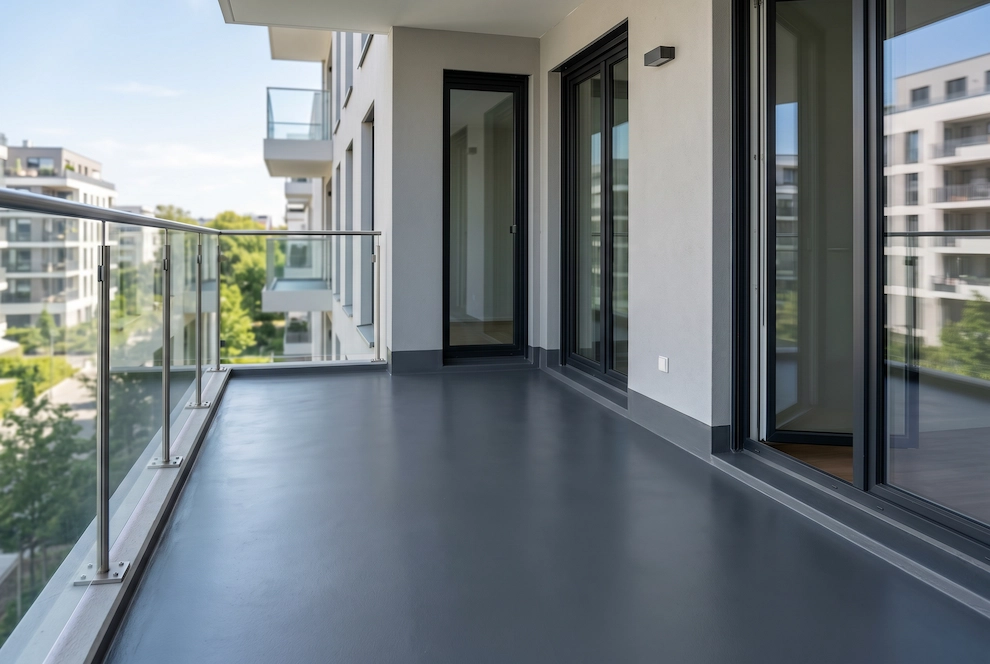
The most critical factor in balcony waterproofing is selecting a material resistant to UV rays and freeze–thaw cycles. Therefore, UV-resistant polyurethane-based membrane systems are preferred for balcony applications. Special attention must also be given to parapet junctions and all drainage outlet areas, which must be fully sealed.
Polin Kimya Waterproofing Products
Polin Kimya offers high-quality waterproofing systems for bathrooms, balconies, and wet areas. You can explore the following product categories:
For more information about Polin Kimya products and reference projects, follow us on Instagram | YouTube | LinkedIn
Contact Polin Kimya experts to select the most suitable system for bathroom and balcony waterproofing.
Frequently Asked Questions
When should bathroom waterproofing be applied?
Bathroom waterproofing must be applied before installing tiles or ceramic coverings. If a water problem is detected in an existing bathroom, the surface covering must be removed and the waterproofing system renewed. Delaying intervention after leakage is noticed will increase damage and repair costs.
Is bathroom waterproofing applied under tiles?
Yes, the waterproofing system is applied beneath ceramic or tile coverings, directly onto the concrete or plaster surface in wet areas of floors and walls. This prevents water and moisture from penetrating below the surface.
How long should be waited after liquid membrane application?
Curing time depends on product type, ambient temperature, and humidity levels. In general, tiling can begin 24 to 72 hours after the final coat is applied. However, the exact waiting time must always be confirmed from the manufacturer’s technical data sheet.