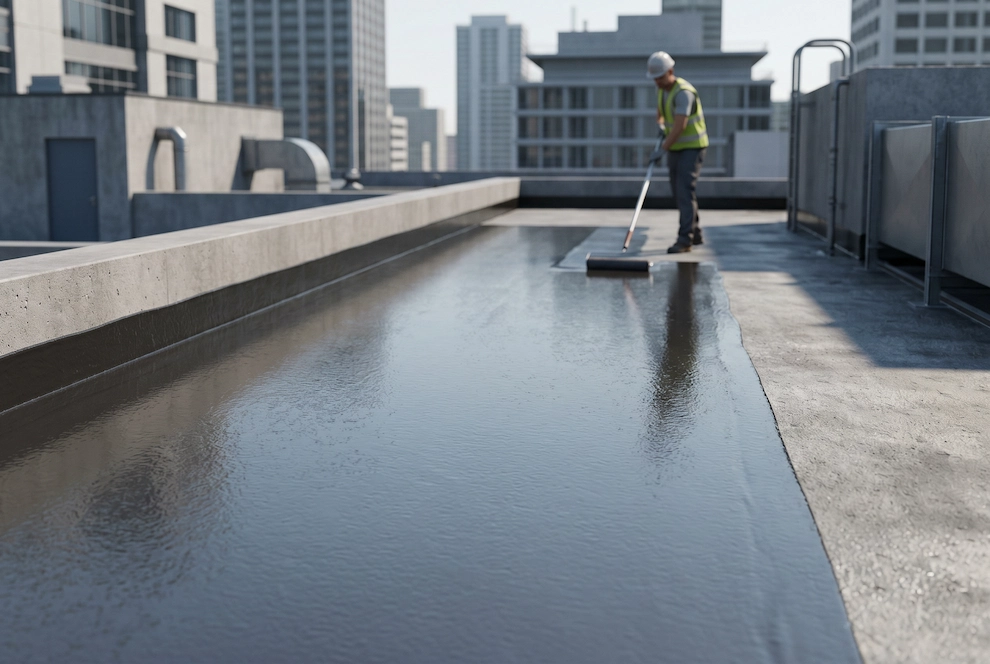
Liquid membrane is a liquid-applied waterproofing system used on surfaces with high water exposure such as terraces, roofs, balconies, and basements. Proper application is essential to ensure the system delivers its expected performance. Therefore, it is important to understand the key factors that must be considered before and during liquid membrane application.
Why Is Liquid Membrane Preferred?
Liquid membrane offers several advantages compared to traditional roll membranes. First and foremost, since it is applied in liquid form, it creates a continuous barrier over the entire surface without any joints or seams. Additionally, it can be easily applied to complex geometries, corners, pipe penetrations, and sloped surfaces.
However, the effectiveness of liquid membrane is directly dependent on application quality. Improper installation significantly reduces the system’s protective performance and increases the risk of early failure.
Key Considerations Before Application
Surface Preparation
Surface preparation is the most critical step in liquid membrane application. The surface must be dry, clean, and free from oil or contaminants. Loose concrete particles, dust, dirt, and old coating residues must be completely removed. Otherwise, proper adhesion cannot be achieved, and waterproofing performance will be compromised.
Crack Repair
Existing cracks must be properly filled and repaired before membrane application. Especially active water-bearing cracks should be treated with fast-setting repair materials. After repairs, the surface must be allowed to dry completely.
Moisture Level Check
The moisture content of the substrate must be below the manufacturer’s specified limit. High moisture levels prevent proper adhesion and may cause blistering. Therefore, moisture testing is essential before application.
Temperature and Weather Conditions
Liquid membrane should be applied within specific temperature ranges and under dry weather conditions. Low temperatures slow down curing, while rain or high humidity negatively affects application quality. Generally, the recommended application temperature range is between 5°C and 35°C.
Key Considerations During Application
Primer Application
Applying a suitable primer before the liquid membrane improves adhesion and reduces moisture-related issues from the substrate. The next application stage should not begin until the primer is fully cured.
Attention to Corners and Detail Areas
Corners, pipe penetrations, and joint areas are the most vulnerable points for leakage. Reinforcement tapes or additional coating layers should be applied in these areas to ensure long-term protection.
Adequate Layer Thickness
To achieve effective waterproofing, the liquid membrane must reach the minimum dry film thickness specified by the manufacturer. This is typically achieved through multiple layers. Each layer must be fully cured before applying the next one.
Interlayer Waiting Time
Insufficient curing time between layers can prevent proper bonding and reduce system performance. Application must strictly follow the drying times provided in the manufacturer’s technical data sheet.
Post-Application Inspection
After application is completed, the surface should be visually inspected and thickness measurements should be taken to confirm that target values have been achieved. If thin areas are detected, additional coating should be applied. The surface must not be loaded or tested with water until full curing is completed.
Polin Kimya Liquid Membrane Products
Polin Kimya manufactures high-performance liquid membrane systems for terraces, roofs, and balconies. You can explore our product categories below:
For application videos and technical content, follow Polin Kimya on social media: YouTube | Instagram | LinkedIn
Contact the Polin Kimya team for the right liquid membrane system and technical support for your project.
Frequently Asked Questions
Is liquid membrane more advantageous than roll membrane?
Both systems offer different advantages. Liquid membranes are superior for complex geometries and applications requiring a seamless, joint-free barrier. Roll membranes, on the other hand, are more efficient for large flat surfaces. The correct system should be selected based on project requirements.
How long does liquid membrane application take?
Application time depends on surface area, number of layers, and curing conditions. For a small terrace, including surface preparation, the process typically takes 2 to 4 days. Larger roof projects may require a longer duration.
Can tiles or ceramics be installed over liquid membrane?
Yes, many liquid membrane systems allow adhesive tile or ceramic installation on top. However, the membrane must be fully cured, and the compatibility of the adhesive with the membrane must be confirmed before installation.