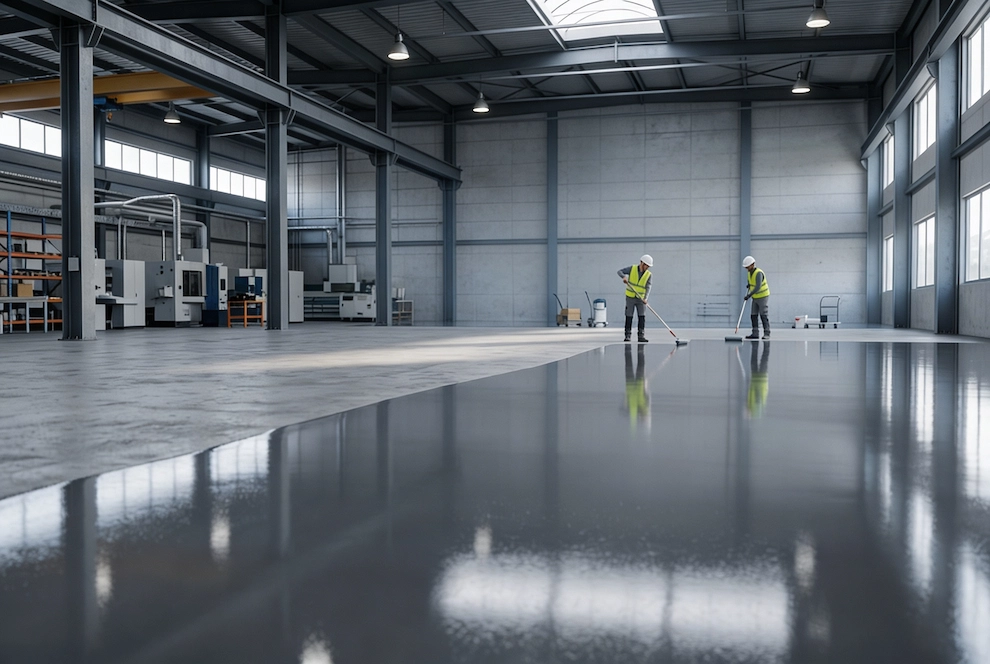
Epoxy floor coating prices vary significantly from project to project. This variation is not only due to product cost but also influenced by factors such as surface preparation, system type, application conditions, and labor. Therefore, understanding the key elements that determine the cost per square meter is essential for accurate budget planning.
Key Factors Affecting Epoxy Floor Coating Prices
1. System Type and Number of Layers
Epoxy flooring systems range from simple single-layer coatings to multi-layer self-leveling systems. The type of system directly affects the amount of material used per square meter and therefore the total cost.
- Single-layer epoxy paint: The most economical option; thin film suitable for light traffic areas
- Two-layer epoxy coating: Preferred for medium traffic areas
- Epoxy self-leveling: Provides high thickness and excellent appearance; higher cost
- Epoxy mortar: The strongest system for heavy traffic and impact-prone areas
2. Surface Preparation
Proper surface preparation is critical for the durability and performance of epoxy flooring. This includes crack repair, cleaning of oil and dirt, and processes such as grinding or shot blasting. The cost of surface preparation depends on the condition of the existing floor. Poor surface conditions significantly increase preparation costs. However, skipping this step can lead to premature coating failure and higher repair expenses in the future.
3. Project Size
As the application area increases, the cost per square meter generally decreases. This is because fixed costs such as labor and setup are distributed across a larger surface. Therefore, smaller projects tend to have higher m² costs compared to large-scale industrial facilities.
4. Surface Condition and Moisture Content
In floors with moisture problems, a moisture barrier system may be required. This additional step increases both material and labor costs. Likewise, uneven surfaces, cracks, or voids may require extra primer or leveling layers.
5. Color and Special Surface Finishes
Custom RAL color options and decorative finishes such as chip, quartz, or metallic pigments can increase the overall cost. Additionally, anti-slip surface treatments also add to the system cost compared to standard applications.
6. Labor and Application Costs
Epoxy flooring application requires experienced professionals, and therefore labor cost represents a significant portion of the total project budget. Labor rates may vary depending on the region and project scope.
Comparison of Epoxy Flooring Systems
| System Type | Thickness | Application Area | Relative Cost |
| Single-layer epoxy paint | 0.1–0.2 mm | Light traffic, warehouses | Low |
| Two-layer epoxy coating | 0.2–0.5 mm | Medium traffic, factories | Medium |
| Epoxy self-leveling | 1.5–3 mm | Heavy traffic, showrooms | High |
| Epoxy mortar | 4–6 mm | Heavy industry, chemical plants | Very high |
Polin Kimya Epoxy Flooring Systems
Polin Kimya offers epoxy flooring systems tailored to different budget and performance requirements. You can explore the following pages to find the most suitable solution for your project:
- Epoxy Floor Coatings and Paints
- Epoxy Flooring Systems
- Industrial Flooring Systems
For application examples and technical content, follow Polin Kimya on LinkedIn | YouTube | Instagram
Contact the Polin Kimya team for a free site inspection and quotation for your project.
Frequently Asked Questions
What is the price range of epoxy flooring?
Epoxy flooring prices vary depending on system type, surface condition, project size, and location. For an accurate quotation, a site inspection and project evaluation are required.
Does epoxy flooring price include labor?
Product prices usually cover only material costs. Application labor is calculated separately. Therefore, both material and labor costs must be considered when calculating the total project budget.
How is the long-term cost of epoxy flooring calculated?
Long-term cost calculation should include initial investment, annual maintenance costs, expected service life, and potential renovation expenses. A high-quality epoxy system may have a higher initial cost but provides lower maintenance expenses over time.