EPDM granule flooring is one of the top choices for those looking for a safe, aesthetic, and long-lasting surfacing solution in children’s playgrounds. When combined with polyurethane binders, EPDM granules create a surface that absorbs impact during falls, prevents slipping, and retains its color for many years. Thanks to these properties, it offers an ideal solution for playground surfaces in terms of both safety and aesthetics.
What Is EPDM Granule Flooring?
EPDM granule flooring is a surfacing system created by mixing polyurethane binders with granules obtained from Ethylene Propylene Diene Monomer rubber processed into small particles and applying the mixture onto the surface. The application can be made over concrete, asphalt, or compacted sub-bases, resulting in a flexible, colorful, and smooth surface once completed.
In addition, by adjusting granule size and layer thickness, different levels of fall safety can be achieved. This ensures appropriate safety standards for all age groups.
Why EPDM Granules Are Preferred in Playgrounds
Impact Absorption and Safety
Falls during play are inevitable. Therefore, playground surfaces must be made from materials with high shock absorption capacity. Thanks to its flexible structure, EPDM granule flooring significantly reduces the risk of head injuries during falls. Moreover, safety requirements are met by applying thickness levels compliant with EN 1177 standards for critical fall height.
Slip Resistance
Wet weather conditions can make playground surfaces slippery, creating serious safety risks. EPDM granule flooring provides much higher slip resistance compared to hard surfaces. Therefore, it ensures safe usage even on rainy days.
UV and Color Resistance
One of the most notable properties of EPDM rubber is its high resistance to UV rays. This allows EPDM granule flooring to maintain its vibrant colors for many years, preserving the aesthetic appearance of playgrounds.
Wide Color Range
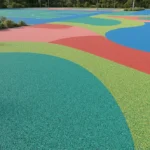
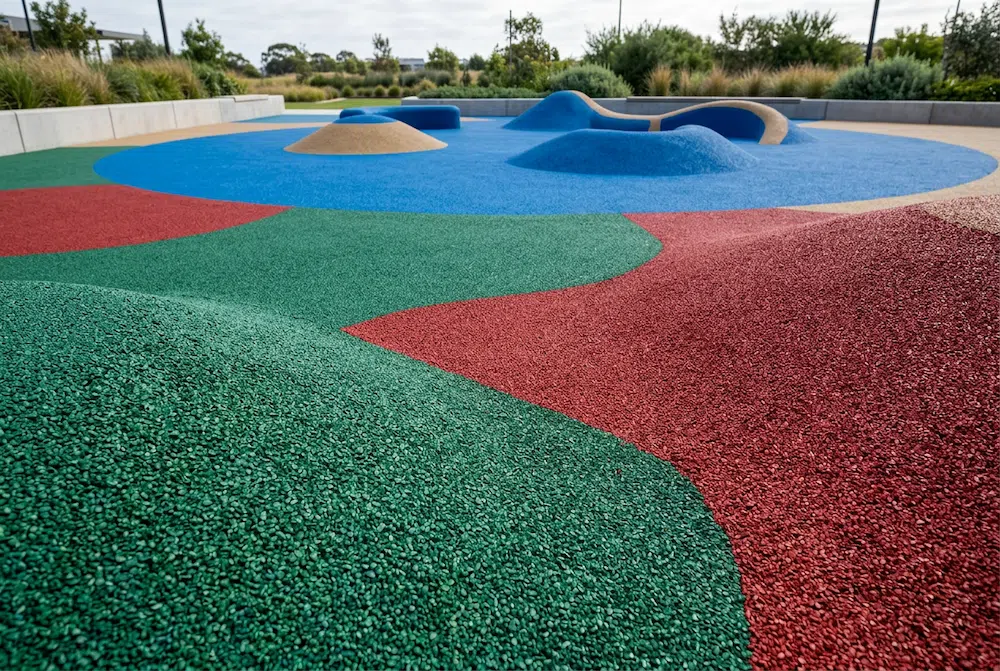
EPDM granules are produced in a wide variety of colors such as red, blue, green, yellow, orange, and many more. This extensive palette gives playground designers the freedom to create creative and engaging surface designs. Different colors can be combined to create zoning, play paths, and decorative patterns.
Easy Maintenance
EPDM granule surfaces are easy to clean using water washing or mechanical sweeping. Additionally, due to their porous structure, they do not form water puddles, eliminating surface water issues.
EPDM Granule Flooring Installation Steps
- Base preparation: Concrete or asphalt sub-base is leveled and cleaned
- If required, a black rubber granule base layer is applied first
- EPDM granules are mixed with polyurethane binder
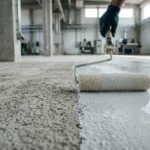
- The mixture is spread onto the surface and leveled with finishing equipment
- The surface is left to cure and fully harden before being opened to use
Polin Kimya EPDM Granule and Binder Systems
Polin Kimya manufactures high-quality EPDM granules and polyurethane binder systems for playgrounds and sports areas. You can explore our product portfolio through the following pages:
- EPDM Granules
- Sports Flooring Systems
To review our playground projects and application visuals, you can follow our social media channels: Instagram | YouTube | LinkedIn
Contact the Polin Kimya team to learn more about the most suitable EPDM granule flooring system for your playground project.
Frequently Asked Questions
What thickness should EPDM granule playground flooring be applied at?
The required thickness depends on the maximum fall height of the play equipment in the area. According to EN 1177 standards, safety testing defines the minimum thickness required for a specific fall height. For example, a fall height of 1.5 meters typically requires 40–50 mm thickness, while higher equipment requires greater thickness.
Does EPDM granule flooring become slippery in the rain?
No, EPDM granule flooring maintains high slip resistance even in wet conditions. Its textured surface structure ensures secure footing in rainy weather, providing a critical safety advantage for children.
Can another layer be applied over EPDM granule flooring?
A new EPDM layer can be applied over an existing worn surface if it still provides sufficient adhesion. However, in cases requiring major renovation, removing the old layer completely and applying a new system generally delivers more durable results.